
Rajya Sabha Debates Data Sovereignty Amendments
The proposed changes would force foreign tech companies to store metadata locally, sparking fears of increased state surveillance.
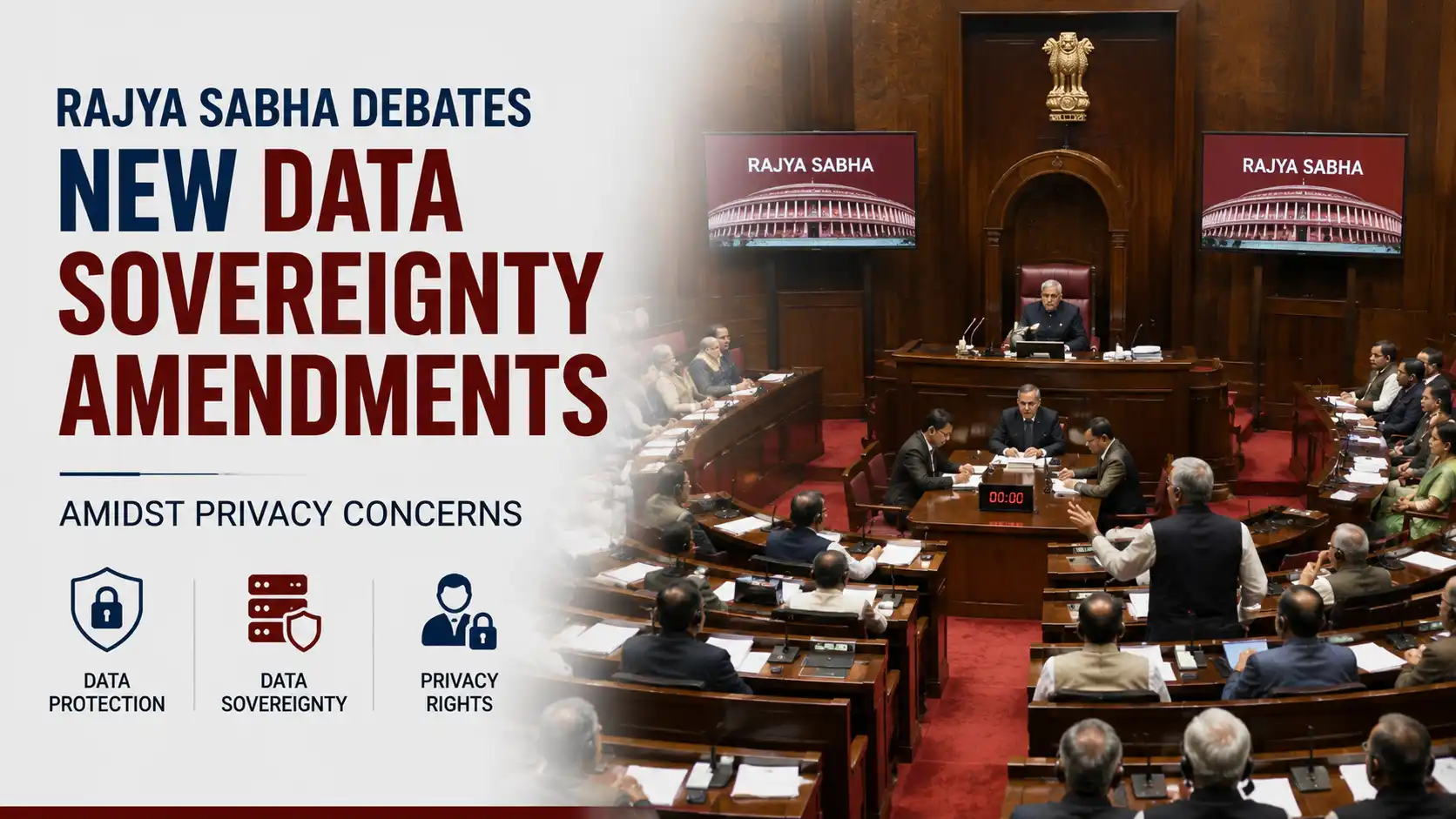
The upper house of Parliament witnessed some of the most aggressive legislative sparring of the year yesterday as the IT Minister tabled the controversial Data Sovereignty (Amendment) Bill, 2026. The legislation demands that all foreign technology platforms store not just primary user data, but also encrypted metadata and biometric hashes on servers physically located within Indian territory.
While tech policy debates in Delhi often get bogged down in technical jargon, this session quickly shifted from server architecture to fundamental civil liberties. The core issue is no longer about where the data lives; it centers on who gets to access it during an investigation.
Under the current Digital Personal Data Protection Act passed in 2023, cross-border data flows were largely permitted provided the receiving nation had adequate safeguards. This new amendment effectively dismantles that compromise. It mandates absolute localization for anything deemed "critical metadata."
National Security vs. State Surveillance
The IT Minister defended the move vigorously. He pointed to a series of sophisticated cyber-attacks originating from state-backed actors in neighboring countries over the past eighteen months, which compromised the health records of millions of citizens.
When an attack happens, our law enforcement agencies currently have to wait 45 days for a mutual legal assistance treaty request to clear through a server in California," the Minister told the house, displaying a stack of unresolved cyber-crime dockets. "In the digital age, a 45-day delay is an eternity. We are not asking to read your messages. We are demanding jurisdiction over our own digital borders.
The opposition, backed by digital rights organizations, sees a more sinister motive. They argue the amendment functions as a backdoor for unrestricted state surveillance. By forcing platforms to keep metadata locally, the government brings that data under the purview of Indian interception laws, which lack the stringent judicial oversight mechanisms found in the European Union or North America.
A prominent opposition MP from West Bengal led the charge, holding up a smartphone during her speech. "The government says they don't want to read our messages," she said, her voice echoing through the chamber. "They don't need to. If you force companies to hand over metadata, regarding who was called, the time of the call, and the location, you don't need the content. The metadata is the surveillance."
The tech industry is quietly expressing deep concern. Senior public policy executives from major US-based cloud providers have noted the massive capital expenditure required to duplicate server infrastructure for metadata alone, a cost that runs into billions of dollars.
More importantly, cybersecurity experts point out that splitting encryption keys to comply with localized metadata storage fundamentally weakens the security architecture of global platforms. A secure global network becomes mathematically impossible if every country demands a local master key. If this passes, smaller encrypted messaging apps will likely exit the Indian market entirely, unable to afford the compliance and unwilling to compromise their global encryption standards.
The Legislative Standoff
The government has a comfortable majority in the Lok Sabha, but the numbers in the Rajya Sabha remain tight. To push the bill through, the ruling coalition needs the support of two key regional parties from the south. Both have historically championed federal autonomy and are deeply suspicious of giving central intelligence agencies unchecked access to localized data pools.
The parliamentary affairs minister spent the lunch recess engaged in intense negotiations to secure those crucial votes. The compromise currently being floated involves setting up a parliamentary oversight committee to review data interception requests. However, digital activists dismiss this as superficial, pointing out that parliamentary committees meet behind closed doors and their findings are rarely binding on security agencies.
There is a genuine tension here that defies easy categorization. The government is entirely correct that relying on foreign jurisdictions for basic law enforcement in the digital realm creates a sovereign vulnerability. A nation of 1.4 billion people cannot depend on a judge in San Francisco to authorize investigations into domestic financial fraud.
Conversely, the opposition highlights that India's domestic surveillance framework remains woefully outdated, relying heavily on colonial-era telegraph laws that were never designed for an age of ubiquitous digital tracking.
The vote is scheduled for late Thursday evening. If the amendment passes, it will trigger a massive restructuring of how the global internet operates in its largest democratic market. If it fails, the government will suffer a major legislative setback just weeks before the winter session. Regardless of the outcome, the era of frictionless global data flows is rapidly coming to an end, signaling a broader Balkanization of the internet.
Abhijit Chowdhury
Staff Reporter
Editorial administrator for Eastern Times.
You May Also Like
Lok Sabha Passes Unified Electoral Roll Bill After Long Debate
Parliament Monsoon Session 2026 Begins July 20: Income Tax Bill and Delimitation Row
Monsoon Session to Open July 20 Amid Bill Showdown
Parliament Monsoon Session 2026: Deadlock, NCPI Row and What Survives After Pradhan
Mamata Backs CJP in NEET Protests
Parliament Erupts Over NEET Paper Leak and Police Crackdown
Opposition Alliance Unveils ₹600 National Minimum Wage
Next DispatchParliament Monsoon Session 2026: Deadlock, NCPI Row and What Survives After Pradhan
Submit a Perspective for editorial consideration at contact.easterntimes@gmail.com. All submissions are moderated for professional credentials and civil exchange.