
Best Places to Visit in India During Monsoon 2026, From Ladakh to Meghalaya
The monsoon splits Indian travel in two — the sun-drenched rain-shadow deserts of Ladakh and Spiti, and the waterfall-soaked green of Coorg, Munnar and Meghalaya. A guide to both, with the cautions that matter.
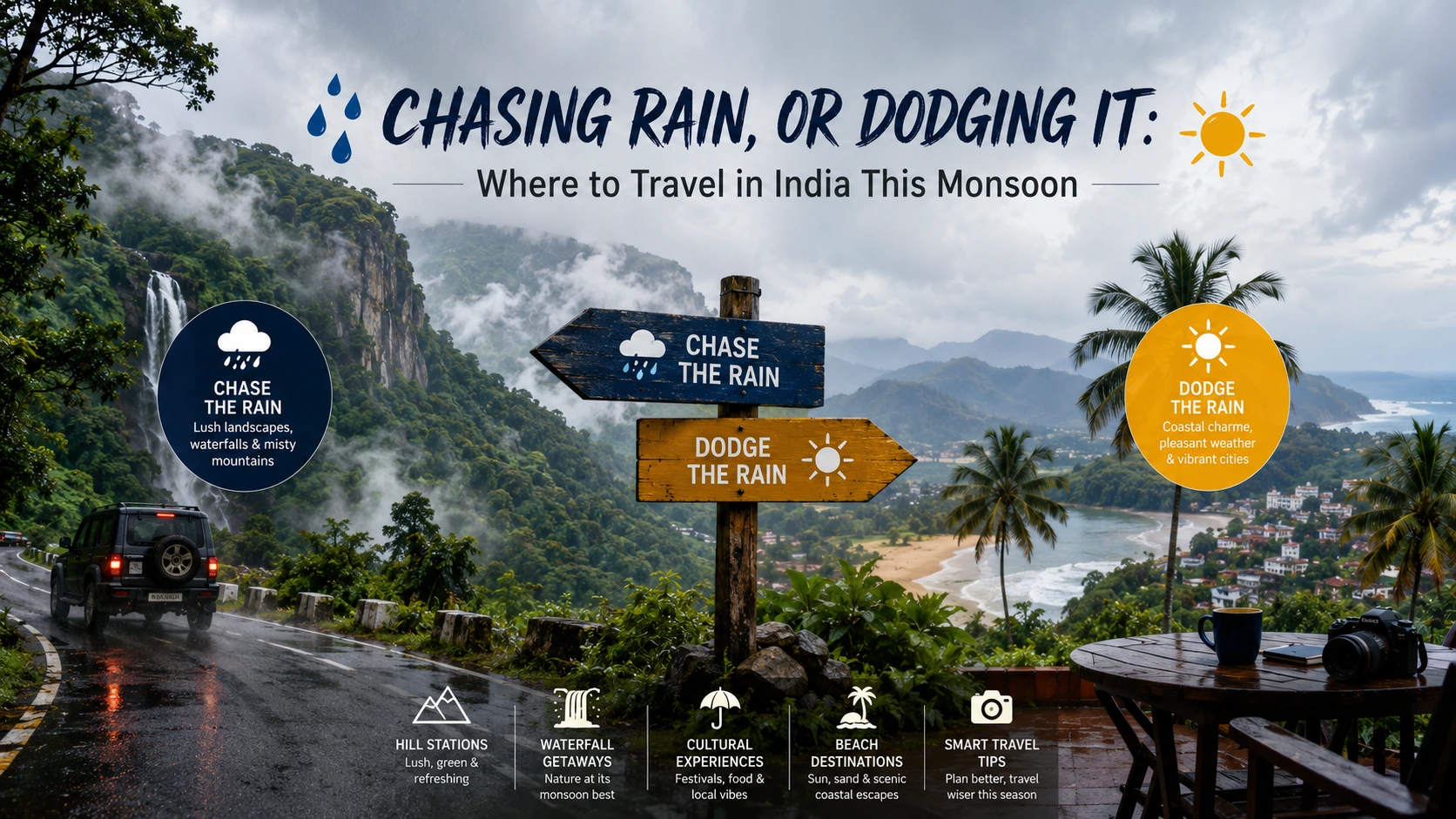
The Indian monsoon is often treated as the season to stay home — flights delayed, roads flooded, plans washed out. But seasoned travellers know it is one of the most rewarding times to explore the country, provided you choose where to go with the weather in mind. Broadly, July 2026 offers two entirely different holidays. You can travel to where the rain barely falls, in the high-altitude cold deserts that sit in the Himalayan rain-shadow. Or you can head straight into the rain, to the Western Ghats and the hills of the northeast, where the monsoon turns the landscape a shade of green that no other season produces.
Both are wonderful. Neither is without risk. This is a guide to the two camps — the rain-free escapes and the lush getaways — along with the practical cautions and responsible-travel notes that turn a monsoon trip from a gamble into a genuine pleasure.
Camp One: The Rain-Free Himalayan Escapes
The trick to a dry monsoon holiday is geography. The great Himalayan wall wrings the moisture out of the monsoon clouds before they can cross it, leaving the trans-Himalayan regions beyond in a rain-shadow that stays dry and sunny while the plains below are drenched. For these places, July is not the off-season — it is peak season.
Ladakh and Leh
Ladakh is the classic monsoon-proof destination. While the rest of the country reaches for umbrellas, Leh basks in clear skies and mild days, and the high-altitude classics open up: the shifting blues of Pangong Lake, the dunes and double-humped camels of Nubra Valley, and the centuries-old monasteries perched above the Indus. July is one of the best windows to visit, with the mountain passes open and the region at its most accessible. The one non-negotiable is acclimatisation — Leh sits at around 3,500 metres, and altitude sickness is a real risk, so build in a day or two of rest on arrival before attempting the higher drives.
Spiti Valley
Spiti, the stark cold desert straddling Himachal Pradesh, is the other great rain-shadow escape — a moonscape of ochre mountains, whitewashed monasteries at Key and Tabo, and villages such as Kibber and Langza that count among the highest inhabited places reachable by road. It is wilder and less developed than Ladakh, which is part of its appeal. The caution here is the approach: the roads into Spiti, particularly from the Manali side, cross terrain prone to landslides and washouts during the monsoon, so routes and timings need careful checking before and during travel.
The Valley of Flowers
For those willing to walk, the monsoon unlocks one experience available at no other time: the Valley of Flowers in Uttarakhand. This UNESCO-listed high-altitude meadow bursts into peak bloom precisely during the monsoon months, carpeting the valley with hundreds of species of alpine flowers. It is a trek rather than a drive, reached on foot from Govindghat via Ghangaria, and it rewards the effort with a spectacle that is genuinely unique. Because it sits in a wetter zone than Ladakh or Spiti, expect rain and slippery trails, and treat the surrounding Himalayan terrain — prone to landslides in heavy rain — with respect.
Camp Two: The Lush, Rain-Soaked Getaways
The other way to do the monsoon is to embrace it. The Western Ghats and the hills of the northeast are transformed by the rains — waterfalls that are dry trickles in summer roar back to life, tea and coffee estates glow an impossible green, and the mist rolls through the valleys in a way that has to be seen. These are places built for the monsoon, and they are at their most atmospheric now.
Coorg, Karnataka
Coorg, the coffee country of Karnataka, is a monsoon favourite for good reason: rolling plantations wreathed in mist, the swollen Abbey and Iruppu falls, and a slow, misty-morning pace ideal for a quiet break. Its main roads and tourist infrastructure hold up reasonably well through the rains, making it one of the more reliable Western Ghats choices.
Munnar, Kerala
Munnar's tea gardens are perhaps the definitive monsoon image of south India — endless green terraces disappearing into cloud, streams and waterfalls at their fullest, and a cool, fresh climate. The rains can be heavy, so keep an eye on weather advisories and road conditions, but the payoff in scenery is hard to match.
Mahabaleshwar, Maharashtra
The closest lush escape for Mumbai and Pune, Mahabaleshwar offers dramatic valley viewpoints, gushing waterfalls and strawberry country, all draped in monsoon mist. As a well-managed hill station, its core infrastructure stays broadly reliable, though the ghat roads demand careful driving in the wet.
Meghalaya: Cherrapunji and the living root bridges
For the full monsoon experience, nothing rivals Meghalaya. Cherrapunji (Sohra) and nearby Mawsynram are among the wettest inhabited places on the planet, and the rains bring their tumbling waterfalls — Nohkalikai among them — to full, thunderous life. The state's famous living root bridges, hand-trained over generations from the roots of rubber fig trees, are at their most magical in the green, dripping monsoon. This is nature at full volume; come prepared for near-constant rain and slippery trails.
Wayanad and Lonavala
Wayanad in Kerala offers misty forests, waterfalls and spice plantations, while Lonavala, between Mumbai and Pune, delivers the classic Sahyadri monsoon of green cliffs, waterfalls and fort walks within easy reach of the city. Both are quintessential wet-season retreats.
Travelling Safely In The Rains
The monsoon's beauty comes with genuine hazards, and honest planning means acknowledging them. Whichever camp you choose, a few cautions apply.
- Landslides and road closures: hilly terrain across both the Himalaya and the Western Ghats is vulnerable to landslides and washouts in heavy rain. Check road and weather conditions before and during travel, keep buffer days in your itinerary, and never attempt flooded crossings.
- Leeches: the wet forests of the Western Ghats and northeast are leech country. Wear closed shoes and long socks, carry salt or a repellent, and check regularly on forest walks.
- Altitude: in Ladakh and Spiti, acclimatise properly before high-altitude drives, and recognise the symptoms of altitude sickness.
- Slippery trails: treks like the Valley of Flowers and Meghalaya's root-bridge trails become slick and demanding; proper footwear and a cautious pace matter.
- Health and water: the monsoon raises the risk of waterborne illness and mosquito-borne disease; drink only safe water and take sensible precautions.
Timing, Booking And Getting There
The monsoon rewards flexible planning more than any other season. For the rain-shadow destinations, July is peak season, which means Leh's flights and Ladakh's permits for the border areas around Pangong and Nubra are in heavy demand — book well ahead, and confirm that the high passes on any planned road route are open. For Spiti, decide early whether to approach from the drier Kinnaur side rather than the landslide-prone Manali side, and keep the itinerary loose enough to absorb a closed road without derailing the whole trip.
For the lush getaways, the calculus is different. Weekday travel and advance homestay bookings help in popular spots like Coorg, Munnar and Lonavala, which fill quickly whenever a long weekend coincides with a break in the rain. In Meghalaya, factor in that the drive to Cherrapunji and the trek down to the double-decker living root bridge near Nongriat are strenuous and slippery in the wet, and allow a full day rather than rushing them. Everywhere, travel insurance that covers weather disruption is worth the small premium the monsoon makes it.
Travelling Responsibly
The fragile ecosystems that make monsoon travel so beautiful are also easily damaged, and the season adds its own responsibilities. In high-altitude regions like Ladakh, Spiti and the Valley of Flowers, water is scarce and waste disposal is difficult; carry out what you carry in, avoid single-use plastic, and stick to marked trails to protect the alpine meadows. In the Western Ghats and Meghalaya, respect the living root bridges and other natural heritage, support local homestays and guides, and follow the instructions of forest authorities, which exist to protect both visitors and the environment.
Responsible travel is also about not overburdening places at their most sensitive. The monsoon strains local infrastructure, and a light, respectful footprint — spending with local communities, minimising waste, and heeding safety advisories rather than pushing through closures for a photograph — is the surest way to keep these destinations worth visiting for the travellers who follow.
Choosing Your Monsoon
So which camp is for you? If you want reliable sunshine, dramatic high-desert landscapes and the certainty of clear skies, point yourself at the rain-shadow: Ladakh, Leh, Spiti, and — for the walkers — the blooming Valley of Flowers. If you want the monsoon in its full, green, thunderous glory, and you do not mind getting wet, head for the waterfalls and mist of Coorg, Munnar, Mahabaleshwar, Wayanad, Lonavala and, above all, Meghalaya.
Either way, July is not a month to write off. Handled with a little planning and a healthy respect for the hazards, the Indian monsoon offers two of the most memorable holidays the country has to give — one where the sun never stops, and one where the rain never does.
A Quick Planner
- Want guaranteed dry, sunny weather: Ladakh, Leh, Spiti Valley.
- Want a once-a-year natural spectacle: the Valley of Flowers in peak bloom.
- Want misty hills and coffee or tea country: Coorg, Munnar, Mahabaleshwar.
- Want the wettest, greenest, most dramatic monsoon: Meghalaya (Cherrapunji/Sohra, living root bridges), Wayanad.
- Want a quick weekend escape from Mumbai or Pune: Lonavala, Mahabaleshwar.
Pack for the camp you pick — sunscreen and layers for the rain-shadow, waterproofs and sturdy shoes for the green — build in buffer days for weather, and let the season do the rest.
Abhijit Chowdhury
Staff Reporter
Editorial administrator for Eastern Times.
Wellness Shift: Meaning Over Measurement in 2026
Next DispatchMonsoon Diet 2026: What to Eat and Avoid in the Rainy Season, According to Ayurveda
Submit a Perspective for editorial consideration at contact.easterntimes@gmail.com. All submissions are moderated for professional credentials and civil exchange.